
What Studio Equipment Integration Actually Covers, Asked and Answered
The question we hear most is what is included when a gallery is integrated. This answer sets out what gets specified, wired and tested, and what stays with the client.
6 minutes to read
The question behind most first calls
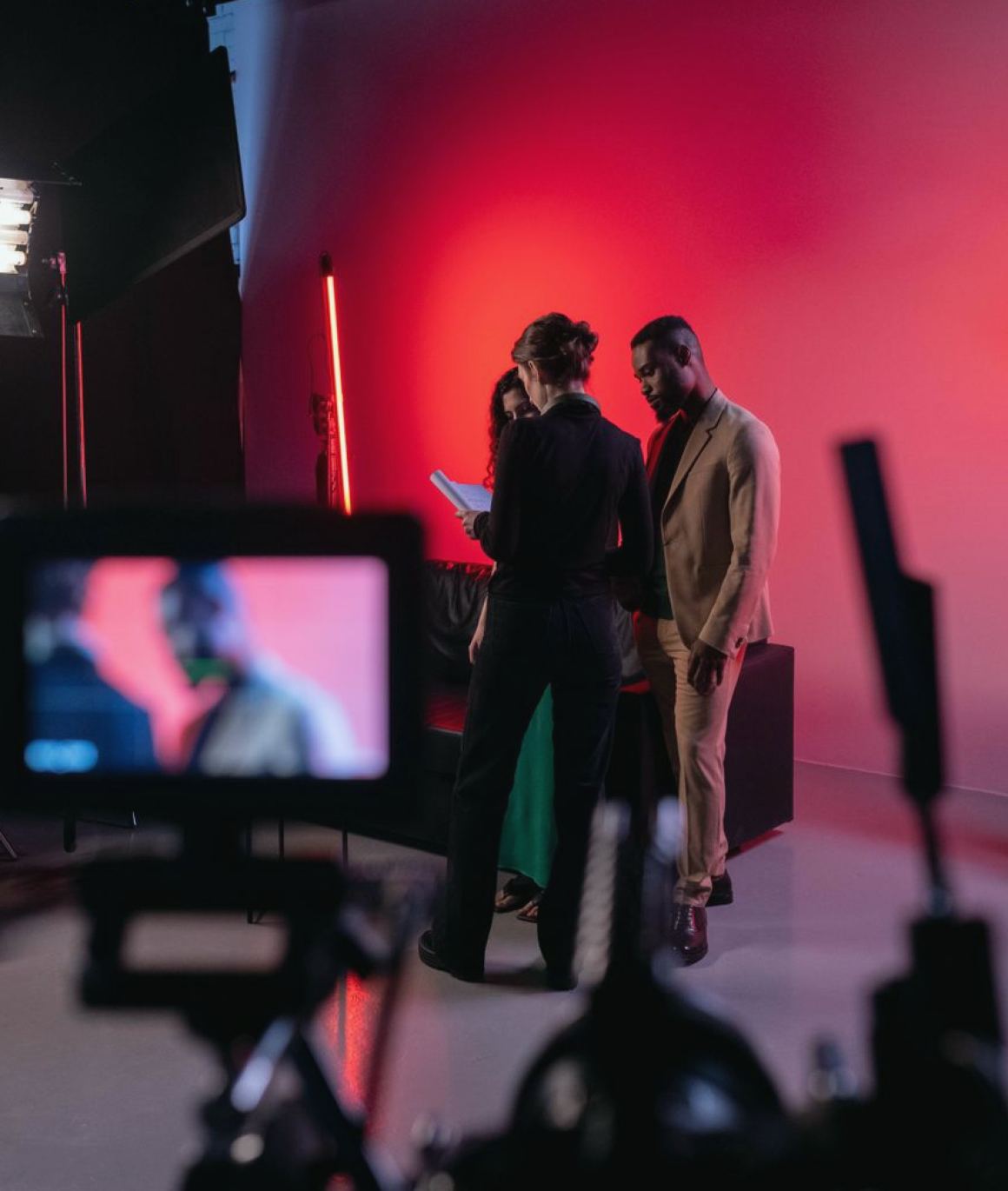
Almost every first conversation about a gallery starts the same way: what do you actually do when you say integration? The word is used loosely across the trade, so a fair answer begins with what it is not. It is not selling a box and leaving. It is not a single piece of kit either. Integration means taking vision mixers, monitoring, intercom and routing and making them behave as one working gallery that a producer, a vision mixer and a sound operator can sit down at and trust.
The work starts on paper. Before anything is ordered we list what the studio has, what it needs to transmit, and who will operate it on a normal Tuesday and on a difficult one. Those two pictures usually differ. A gallery designed only for the good day tends to fail on the bad one.
Our job is to close the gap between them. That is what the rest of this note explains, in the order a project tends to unfold.
What we specify before anything is bought
Specification is the quietest part of the job and the one that saves the most money. We write down the number of sources, the number of outputs, the monitoring each seat needs and the intercom channels the crew will use. From that we choose a vision mixer sized for the programme rather than for the brochure, and we say plainly when a smaller unit will do.
Routing gets the same attention. A router that is too small becomes a constant source of workarounds, while one that is far too large leaves money sitting in a rack. We aim for headroom that the studio will realistically use over the next few years, and we show the reasoning so that your own engineers can challenge it.
The result is a written specification you can take to any supplier. Some clients buy equipment through us and some do not, and the document is useful either way.
- Source and output counts agreed with the producer
- Monitoring layout for each seat in the gallery
- Intercom channels mapped to real crew roles
- Router size with stated spare capacity
Installation and wiring done to be maintained
Installation is where a gallery earns or loses its reputation for reliability. Cable runs are laid out so that a failed connection can be traced in minutes rather than hours. Every cable is labelled at both ends, patch fields are logical, and power is distributed so that one fault does not take down the whole room.
Callum commissions each installation on site, and that matters more than it sounds. Drawings are never quite the same as the building, and the person who designed the signal flow should be the one who sees it carry a picture for the first time.
We also leave the rack as we would want to find it. Tidy, documented and calm. If you have to call us for something your own engineer could have fixed with the right label, we have not finished the job.
Testing, rehearsal and handover
Nothing is signed off on a quiet bench test alone. We run the gallery the way it will be used: all sources live, intercom busy, graphics firing, and a deliberate fault or two introduced to see how the room responds. A backup path that has never been switched to is only a hope, so we switch to it.
Handover then covers people as well as equipment. Operators are walked through their own seats, the producer sees how to read the monitoring, and a short written guide stays in the gallery. It is plain language, with a list of what to try first when something looks wrong.
If a rehearsal with your crew shows that a layout does not suit them, we change it while we are still on site. That is far cheaper than discovering it during a live programme.
- Full-chain test with all sources live
- Deliberate failover to every backup path
- Operator walkthrough at each seat
- Written quick-fault guide left in the gallery
What stays with you, and what we do not promise
People often ask where our responsibility ends. We design, supply or specify, install, wire, commission and document. We do not run your programmes, and we do not guarantee that a gallery will never fail, because no honest engineer can. What we promise is that the design is sensible, the faults are findable, and the documentation lets your team act quickly.
Some things remain with the client by nature: the building, the mains supply, the internet connection that feeds a remote guest, and the habits of the people using the room. We flag problems in any of these when we see them, even where fixing them is not our work.
If the studio already has partly working equipment, we say which pieces are worth keeping. Reusing sound kit is often the sensible choice, and we would rather tell you so than sell you a replacement.
How to prepare for the first conversation
A short list of facts makes the first discussion far more useful. Bring the dimensions of the room and gallery, a rough list of existing equipment, and a description of the programmes you make or plan to make. Photographs of the current racks and cable routes help a great deal, even untidy ones.
Think about who will operate the gallery and how experienced they are. A team of two seasoned engineers needs a very different layout from a rotating group of volunteers, and the design should follow the people.
Finally, tell us what has gone wrong before. Failures are the best brief we receive. From there we send a written quotation, you confirm it, and the work is invoiced and paid by bank transfer under our payment and refund terms.
- Room and gallery dimensions
- List of existing equipment
- Programme formats and transmission needs
- Past faults and near misses
So the short answer is this: integration means designing, installing and proving a gallery so that its parts work as one, then leaving your team able to look after it. It is careful, mostly unglamorous work, and it shows when a live programme goes out without drama. If you are weighing an upgrade, send us the facts above through the contact page and we will reply in writing.
Owen Tregear
Acoustic ConsultantOwen measures and treats studio rooms so voices sound natural and consistent on air.
Get in touch
Write to us: [email protected]